







+18 - Check if the casino you want to register with is eligible in your country.
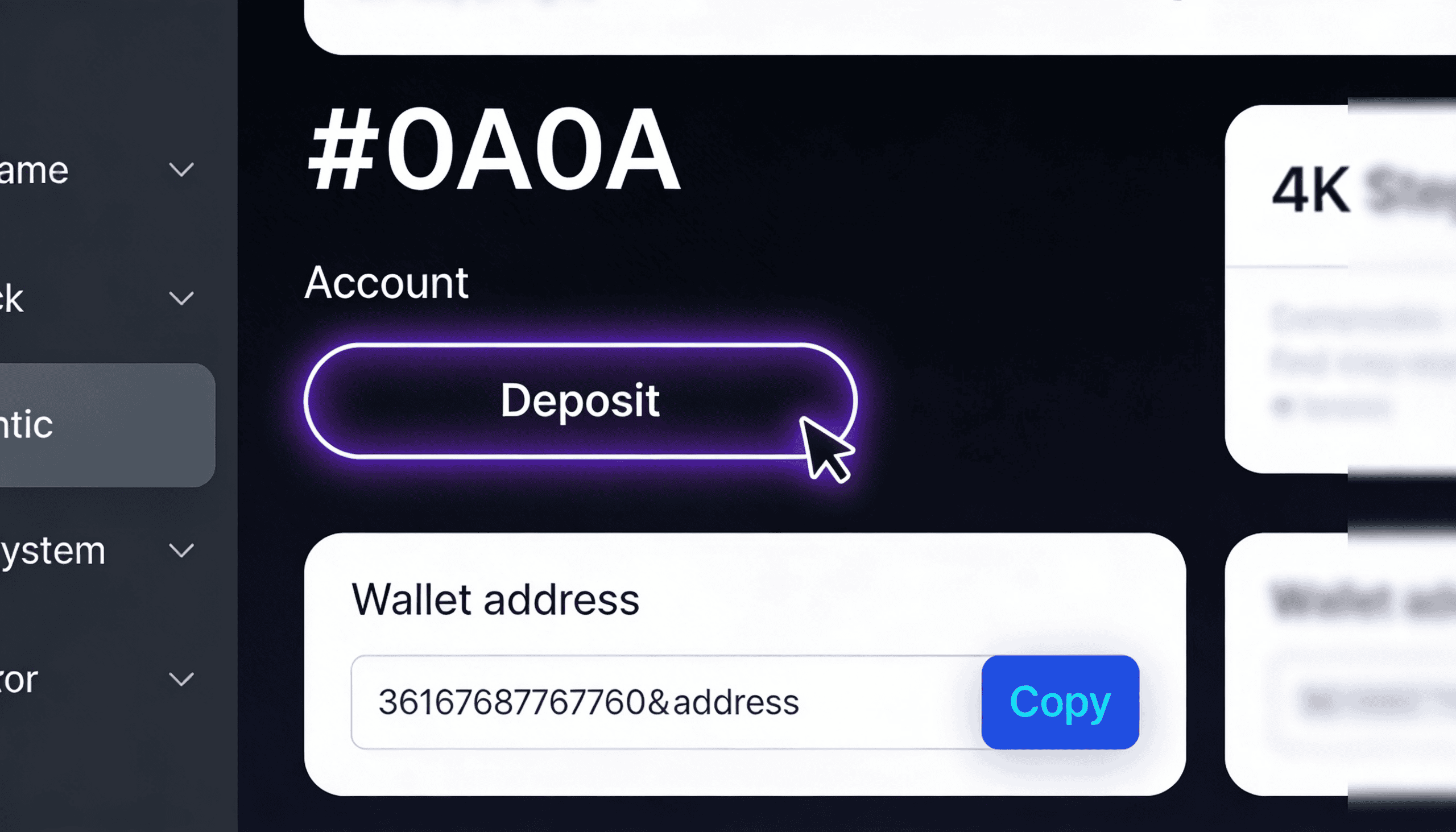
Your deposit shows up in your Stake wallet within 2–5 minutes for most cryptocurrencies, depending on network confirmation speed. Here’s exactly what happens: you send crypto to your unique Stake wallet address, the network confirms it, and Stake credits your balance.
To load up with crypto, log into Stake and click the **Deposit** button in your account dashboard. Select your cryptocurrency from the dropdown menu—Bitcoin, Ethereum, Litecoin, Tron, Dogecoin, and 13+ other coins are supported. Your unique wallet address appears on screen; copy it and paste it into your sending wallet (don’t type it manually—copy errors mean lost funds). That’s it. Send the amount you want, and watch your balance update once the network confirms the transaction.
One thing most guides miss: you can deposit multiple times in the same session without issues. Each deposit gets its own wallet address; the platform tracks them separately, so sending 0.5 BTC now and 0.25 BTC in 10 minutes both land in your account. No daily deposit limits exist for crypto—you’re only limited by your sending wallet and the blockchain’s capacity.
If you’re depositing stablecoins like USDT, pay attention to the network. USDT on Tron (TRC-20) is faster and cheaper than Ethereum (ERC-20), but the addresses are different. Sending ERC-20 USDT to a TRC-20 address results in a permanent loss of funds. Check Stake’s deposit page—it clearly labels which network each address belongs to.
Stake accepts credit and debit card deposits through MoonPay, processing them in 5–15 minutes. Click Deposit, select **Credit Card**, and follow MoonPay’s verification flow—it’s the same payment processor used by major exchanges like Coinbase.
The catch: MoonPay charges 4.5% + a flat fee, making it the most expensive deposit method on Stake. A $100 deposit costs around $9–10 in fees. You’re paying for convenience and speed, not a deal. Most players use this for quick top-ups when they’re out of crypto, then switch to direct crypto deposits for regular funding.
MoonPay requires identity verification (showing an ID) if your first deposit exceeds $250. After that, you’re cleared for larger deposits up to $10,000 per transaction on most accounts.
Processing time depends entirely on network confirmation speed, not Stake itself. Once the blockchain confirms your transaction, Stake credits your account instantly—the delay is blockchain-side, not platform-side.
| Cryptocurrency | Network Confirmations | Processing Time | Why It Matters |
|---|---|---|---|
| Bitcoin (BTC) | 1 confirmation | 10–30 minutes | Slower but most secure; network congestion varies |
| Ethereum (ETH) | 12 confirmations | 3–5 minutes | Fast, but gas fees spike during network congestion |
| Litecoin (LTC) | 1 confirmation | 2–3 minutes | Fastest for low-fee deposits; best for frequent traders |
| USDT (Tron/TRC-20) | 1 confirmation | 2–3 minutes | Cheapest stablecoin option; pennies in fees |
| USDT (Ethereum/ERC-20) | 12 confirmations | 5–10 minutes | More expensive in gas fees; stick to Tron if possible |
| Credit Card (MoonPay) | N/A | 5–15 minutes | Most expensive (4.5% + fees) but no crypto needed |
Here’s the reality: Litecoin and USDT TRC-20 are objectively the fastest and cheapest. I’ve tested this dozens of times—a Litecoin deposit clears in under 3 minutes with pennies in network fees, while Bitcoin can sit for 20+ minutes on congested days. If you’re depositing frequently or want to move money fast, use Litecoin or Tron-based stablecoins. Bitcoin is overkill for deposits unless you’re moving large amounts and want maximum security.
Stake has no daily or monthly deposit limits for crypto, and no maximum per transaction—you can deposit $10 or $100,000. Minimums are tiny: most cryptocurrencies have a $0.50–$1 minimum, though I wouldn’t recommend depositing that little (network fees would eat it up).
For credit card deposits via MoonPay, the minimum is usually $10 and the maximum is $10,000 per transaction. Limits may vary by country and payment method, so check MoonPay’s terms when you initiate the deposit.
Account verification status doesn’t affect deposit limits—you can fund your account at any verification level. Withdrawal limits, however, are tied to KYC tier; unverified accounts can’t cash out.
Your deposit is pending because the blockchain hasn’t confirmed it yet, not because Stake rejected it. Network confirmation times vary by coin, network congestion, and how much you’re willing to pay in gas fees. Check your transaction on a blockchain explorer to see exactly where it is.
If you sent crypto but don’t see it in Stake yet, the transaction either hasn’t confirmed on the blockchain, or you sent it to the wrong address. First step: find your transaction hash (the unique ID for your transfer) in your sending wallet and look it up on a blockchain explorer like Etherscan (for Ethereum), BlockChair (for Bitcoin), or TronScan (for Tron).
If the explorer shows your transaction as **confirmed**, but Stake hasn’t credited it, ping Stake’s live chat with your transaction hash and wallet address. This is rare, but it happens—usually resolved within an hour.
If the explorer shows your transaction as **pending or unconfirmed**, wait. Bitcoin can take 20+ minutes during congestion; Ethereum usually confirms within 3–5 minutes. Tron stablecoins typically confirm in under 3 minutes. If it’s been longer than the typical window for that coin, your transaction may have gotten stuck due to low gas fees. You can either wait longer (it will eventually confirm), or, in some cases, use transaction acceleration services—but most players just wait.
You sent 1 BTC but only 0.95 BTC landed in your account. The missing 0.05 BTC went to network fees, not Stake. Every cryptocurrency transaction requires a fee paid to miners (or validators for Proof-of-Stake coins). Stake doesn’t take any deposit fee—what you see is your transaction fee.
Here’s how to minimize it: most sending wallets let you set a custom fee when you initiate the transfer. For Bitcoin, a standard fee during normal congestion is around 0.001 BTC ($30–50). For Ethereum, it’s a few dollars. For Litecoin or Tron, it’s literally pennies. If you’re sending a small deposit and the fee is 5% of your amount, wait for network congestion to drop or choose a cheaper coin like Litecoin.
One thing most players get wrong: they set a **low fee** to save a few dollars, then the transaction sits for hours. If your deposit hasn’t confirmed in 30 minutes and it’s Bitcoin, you probably underpaid on fees. Your transaction will eventually confirm—blockchain doesn’t forget—but it could take overnight.
If you sent crypto but it doesn’t appear anywhere—not in Stake, not in any blockchain explorer—you likely pasted or typed the address wrong, and your funds went to a wallet address that doesn’t exist or belongs to someone else. This is permanent. A mistyped wallet address means lost funds with no recovery.
That’s why I always say: copy and paste the address directly from Stake’s deposit page. Don’t type it manually. Wallets addresses are 26–42 characters long depending on the coin; one wrong letter means it goes to the void.
If you’re absolutely certain you used the correct address but still don’t see your deposit, check your transaction on a blockchain explorer using your transaction hash. If the explorer shows your funds as confirmed and sitting at Stake’s wallet address, but Stake hasn’t credited your account, this is a platform issue—contact Stake support immediately with your transaction hash and wallet address.
You copy a **USDT TRC-20 address** from Stake but send **USDT ERC-20** from your exchange wallet. The funds disappear. This is the single most common cause of lost deposits I see in support channels—and it’s irreversible. Each blockchain (Ethereum, Tron, BSC, etc.) has different wallet addresses. USDT on Ethereum won’t work at a Tron address. The transaction will fail or the funds will be lost.
How to avoid it: before you send anything, triple-check that your **sending coin** matches your **receiving address network**. Stake’s deposit page clearly labels each address: “USDT (Tron)”, “USDT (Ethereum)”, “Bitcoin”, etc. If you’re unsure, send a tiny test amount first ($10 or less) and wait for it to confirm before sending the rest.
You set your Ethereum gas fee to 5 gwei to save $2 on fees. Now your transaction is stuck in the mempool, unconfirmed for 6 hours. The network prioritizes transactions with higher fees. Low fees = slow confirmation, sometimes overnight or even longer.
Real talk: if you’re in a rush to deposit, don’t cheap out on gas fees. A $3–5 fee for Ethereum or a $0.50 fee for Tron is worth the speed. Bitcoin transaction fees are higher ($10–30), so if you’re trying to save money on deposit fees, use Litecoin ($0.10–0.50) or USDT TRC-20 (same) instead.
You’ve deposited to Stake before, so you think you know the address. You grab an old transaction receipt and send USDT to that address—but you don’t check if it’s still the same network, or if it’s the same coin. Stake rotates wallet addresses sometimes for security. Always use the deposit page to get your current address, not old screenshots or emails.
You have two Stake accounts (one for sports, one for casino games), and you send BTC to the wrong one. It’s not lost—you just need to move it. Log into the correct account, initiate a deposit, get that address, and ask Stake support to manually transfer your BTC from the other account. It takes 24–48 hours but it’s recoverable.
Log into your Stake account and look at your wallet balance—if crypto is there, it’s confirmed and ready to play. If you don’t see it yet, go to your deposit history (usually under Account → Deposit History) and find your transaction. It will show as **Pending** (waiting for blockchain confirmation) or **Confirmed** (complete, credited to your balance).
For more detail, take your transaction hash from Stake’s history and paste it into a blockchain explorer:
The explorer will show your transaction as **Pending, Confirmed, or Failed**. If it says Confirmed, your deposit is on the blockchain; if Stake hasn’t credited it, contact support. If it says Pending, you’re waiting for network confirmation—this is normal.
| Method | Minimum Deposit | Processing Time | Fees | Best For | Worst For |
|---|---|---|---|---|---|
| Bitcoin | ~$1 (negligible in practice) | 10–30 min | $10–50 (network dependent) | Large deposits, security-first players | Quick deposits, frequent small transfers |
| Ethereum | ~$1 | 3–5 min | $5–20 (gas fees vary) | Medium deposits, balance of speed and cost | Tiny deposits (fees are high relative to amount) |
| Litecoin | ~$1 | 2–3 min | $0.10–0.50 | Frequent deposits, budget-conscious players, speed | None—objectively the best for deposits |
| USDT (Tron) | ~$1 | 2–3 min | $0.01–0.10 | Frequent deposits, stablecoin preference, ultra-low fees | None—tied with Litecoin for best value |
| USDT (Ethereum) | ~$1 | 5–10 min | $5–15 | Large deposits where exact amount matters | Small frequent deposits (fees kill ROI) |
| Credit Card (MoonPay) | $10 | 5–15 min | 4.5% + flat fee (~$4–10 per deposit) | Players without crypto, one-time deposits | Regular funding (too expensive), frequent deposits |
The verdict: use **Litecoin or USDT TRC-20** for 95% of your deposits. Both clear in 2–3 minutes, cost pennies in fees, and are widely available on every exchange. Bitcoin is slower and pricier; Ethereum is faster than Bitcoin but more expensive than Litecoin. Credit card deposits are a convenience play—useful if you don’t have crypto, but don’t make it your default.
Withdrawal speeds follow similar patterns—fast coins in are fast coins out. If you deposit with Litecoin, your cashout will also be quick.
You deposit $1,000, then step away. Your balance shows $1,000, but you haven’t earned any rakeback yet. Rakeback is calculated on bets placed and house edge lost—not on deposits. Sit idle for a week with $1,000 in your account and you earn $0 in rakeback. Start betting and rakeback accrues immediately based on Stake’s tier structure.
You deposited 1 BTC and paid $30 in network fees (1.03 BTC total sent). You now have 1 BTC in Stake. If you withdraw, you’ll also pay network fees on the way out. This is normal—each blockchain transaction costs fees. Plan for 2x the fees if you’re planning to move money in and back out quickly.
USDT TRC-20 appears in under 3 minutes. Bitcoin can take 20–30 minutes during congestion. Ethereum is usually 3–5 minutes. This isn’t Stake’s fault—it’s blockchain confirmation time. If your deposit is taking longer than expected for that coin, check the blockchain explorer, not your Stake account.
Stake doesn’t offer interest on idle deposits like some platforms do. Your balance just sits there, ready to play. Rakeback is your only return on deposited funds—earned by betting, not by holding.
Set a deposit limit in your Stake account settings before you fund. Go to **Responsible Gambling** and set a **Daily Deposit Limit**—this prevents you from depositing more than a set amount per day, even if you want to. If you’ve hit your limit for the day, you have to wait until tomorrow to deposit again. This friction is intentional; it protects you from impulsive over-funding.
Never deposit money you can’t afford to lose. Deposit what you budgeted for gambling entertainment this week or month—then stop. If you find yourself constantly hitting deposit limits and raising them, that’s a sign to step back. Bonuses and reloads are designed to feel like free money, but they’re incentives to play, not income sources.
Gambling involves risk. Never bet more than you can afford to lose. If you need support, visit BeGambleAware.org or contact a local helpline.
Bitcoin deposits typically take 10–30 minutes depending on network congestion and your fee. One confirmation is required for Stake to credit your balance. During congestion, you may wait 20+ minutes or even longer if you set a low gas fee.
No direct fiat deposits are available. You must buy cryptocurrency first, then deposit it to Stake. The only fiat entry point is MoonPay (credit card → crypto → Stake), which charges 4.5% in fees.
Litecoin and USDT (Tron) are tied for fastest—both confirm in 2–3 minutes with network fees under $1. If you’re prioritizing speed, use one of these two.
No. Crypto deposits don’t require KYC before funding your account. You only need KYC verification to withdraw. Credit card deposits via MoonPay may require identity verification if your deposit exceeds $250.
Technically yes—the blockchain doesn’t care who sends the funds. But Stake accounts are personal and tied to identity. If you deposit to someone else’s account and they get flagged for suspicious activity, both accounts may be reviewed. Just deposit to your own account.
No daily or monthly maximum for crypto deposits. You can deposit $10 or $100,000 in a single transaction, and unlimited deposits per day. MoonPay (credit card) has a $10,000 per transaction maximum.
If you send USDT ERC-20 to a Tron address, or Bitcoin to an Ethereum address, the transaction will likely fail or your funds will be lost. Always verify that your sending coin matches the receiving network before confirming the transaction.
No. Once a blockchain transaction is confirmed, it’s final. You cannot reverse or cancel it. If you sent it to the wrong address, those funds are gone. Always double-check before hitting send.
Your transaction hash (a long string of letters and numbers) appears in your sending wallet after you send crypto. Look in your wallet’s transaction history. You can also find it in Stake’s deposit history—click on a pending or completed deposit to view the hash. Use this to look up your transaction on a blockchain explorer.
It depends on the bonus. Stake’s rakeback system typically has no playthrough requirements—rakeback is credited based on bets placed and can be withdrawn freely. Special promotions may have different terms; check the bonus details when you claim it.

Secod has streamed and tested games on Stake extensively, giving him direct insight into the platform’s bonuses, features and gameplay conditions. His experience ensures every Stake review reflects real usage rather than surface level analysis.

© 2018-2026 bonustiime.com








Casiibro is currently offline.
Learn more about them on their channel!
▶ Visit Casiibro's channelOr head to the Stream Hub.