
Stake Casino Blog: Guides, Strategies & Safety | BonusTiime
You're here because you want to understand Stake. Maybe you've heard it's legit. Maybe you're curious about crypto casinos. Either way, this blog answers the questions competitors dodge.
Written by Secod on 03-03-2026


- Step-by-Step: How to Register & Fund Your Stake Account
- Understanding Game RTP & Volatility: How to Pick Slots That Last Longer
- Crypto Deposits & Withdrawals: Fees, Times & Which Currency to Use
- Stake Bonuses Explained: Welcome, Reload & VIP Rewards
- Bankroll Management: How to Make Your $50-$500 Last Longer
- Responsible Gambling on Stake: Tools, Limits & When to Step Back
- Stake vs. Competitors: How Stake Stacks Up Against Roobet, BitStarz & Others
- Frequently Asked Questions
What Is Stake Casino? License, Safety & How to Start
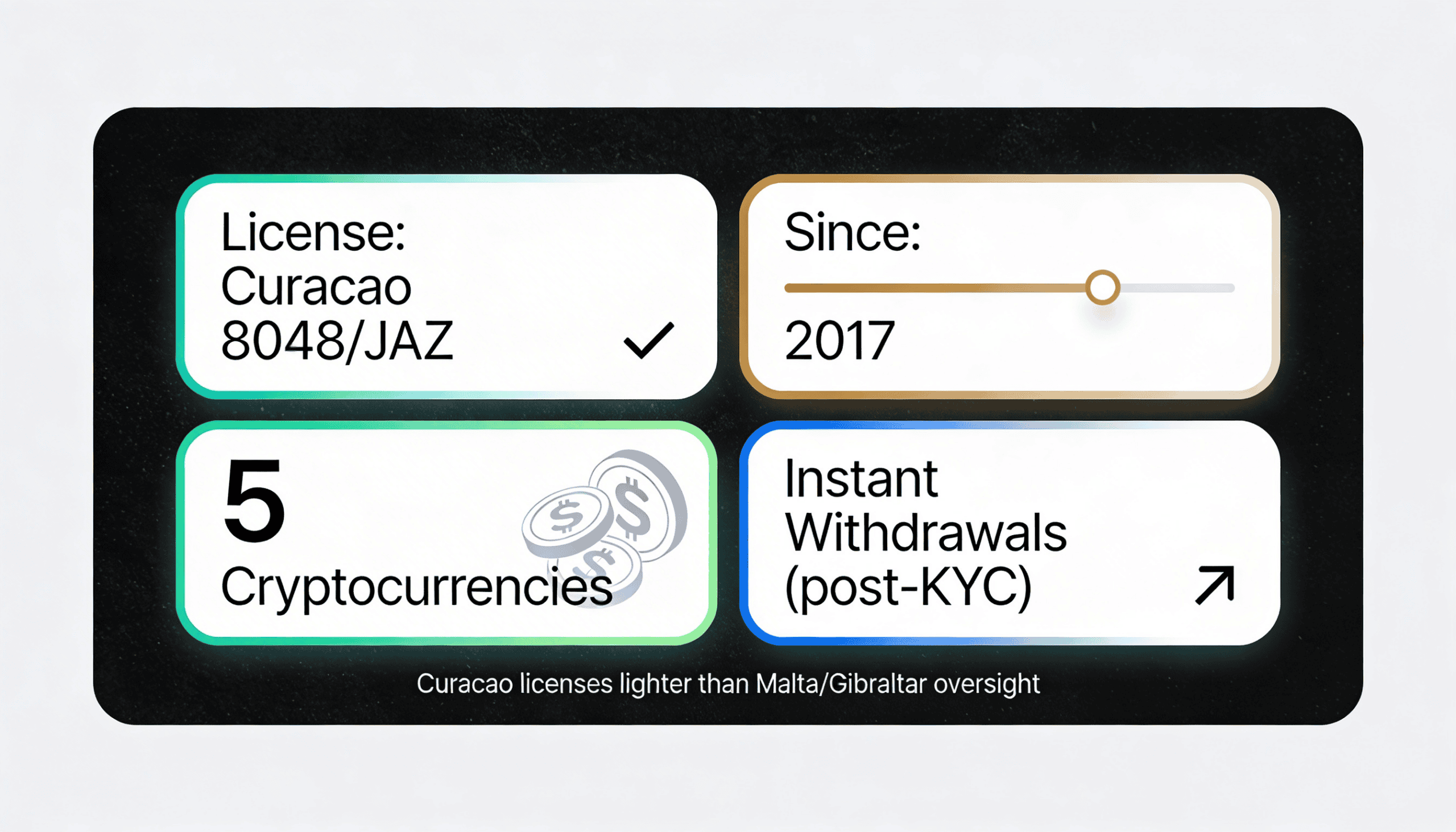
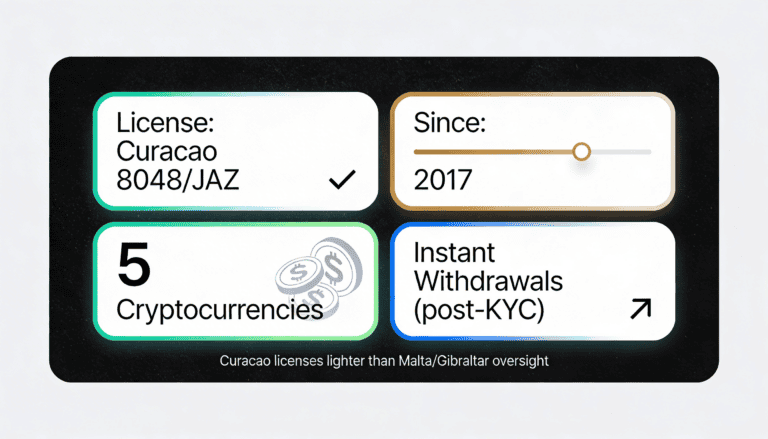
Stake is a licensed crypto casino operating under a Curacao gaming license since 2017. Players deposit cryptocurrency directly from their wallets, play slots and crash games, and withdraw instantly after KYC verification completes. Stake doesn’t hold your crypto. You maintain full custody.
Here’s the reality: Stake doesn’t offer 24/7 live chat support in all regions, and withdrawal verification can take 24 to 48 hours. That’s the friction point most players hate. We’re telling you upfront because honesty builds trust.
Stake’s License & Regulatory Status
Direct answer: Stake holds a Curacao gaming license (License Number 8048/JAZ).
Curacao licenses are legitimate but lighter than Malta or Gibraltar oversight. What this means: Stake must follow Curacao’s rules, but player protection is less robust than jurisdictions with stricter regulators. Curacao licenses don’t cover US or UK players.
The license was issued by the Curacao eGaming Authority in 2017. Stake’s regulatory body contact is available on their site. The license is real. The oversight exists. The protection isn’t as strong as traditional casinos in tier-1 markets, but it’s present.
Key data: Stake has processed millions in withdrawals since 2017 without regulatory seizure of player funds. That doesn’t guarantee forever safety, but it’s a positive signal.
Why KYC (Know Your Customer) Verification Matters
KYC isn’t Stake being paranoid. It’s law. Curacao requires identity verification for withdrawals. Here’s how it works:
- Level 1 (Registration): Email and password only. You can deposit and play.
- Level 2 (Withdrawals): Government ID (passport or driver’s license) plus proof of address (utility bill or bank statement issued within 3 months). Required for any withdrawal.
- Timeline: Stake reviews submissions within 24 to 48 hours. No expedited option exists.
- Warning: Never share seed phrases or private keys during verification. Stake will never ask for these.
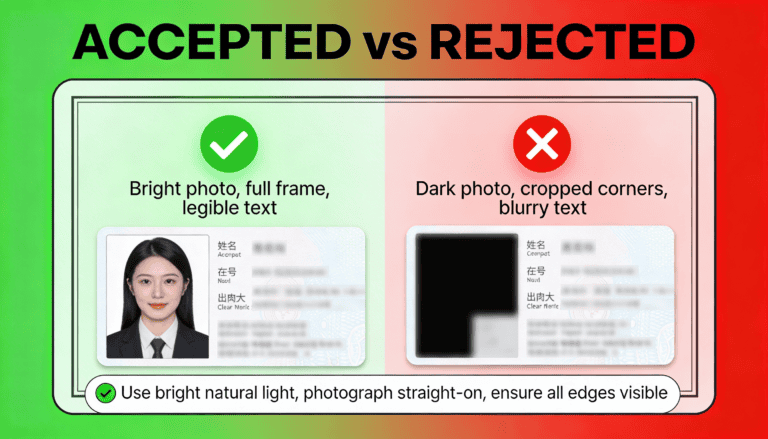
Real talk: Blurry photos get rejected. If your ID photo is dark or your address proof is cut off, expect a rejection email and a 24-hour resubmission delay. Use legible, full-frame photos.
Red Flags to Avoid: What Stake Does NOT Offer
- No access for US or UK residents (geoblocking is strict).
- No live phone support in most regions (email and support tickets only).
- No mandatory deposit limits on signup (you must set them manually).
- No mandatory cool-down periods between sessions.
- No pre-play responsible gambling tools (reality checks and deposit limits are optional add-ons).
These aren’t deal-breakers, but they matter if you rely on protective guardrails. Read our responsible gaming guide to understand how to build your own safety net.
Step-by-Step: How to Register & Fund Your Stake Account
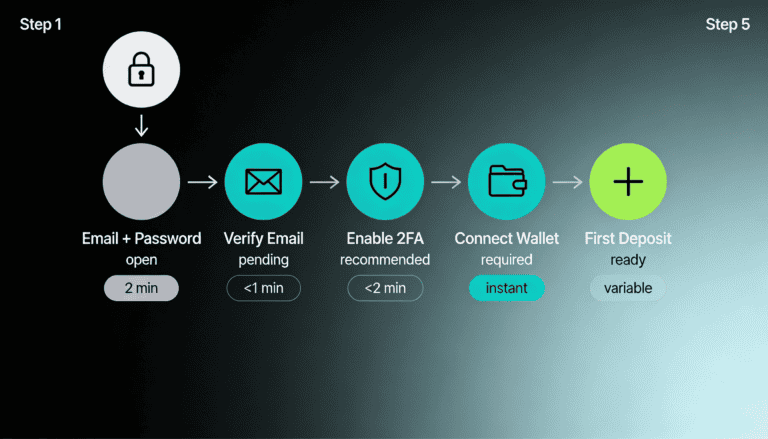
Registration takes 2 minutes. Funding is instant. But withdrawals require KYC, which adds 24 to 48 hours upfront. Here’s the exact process so you don’t get stuck.
1. Create Your Stake Account (2 Minutes)
- Go to Stake.com. Click Sign Up in the top right.
- Enter your email address. Use one you control and check regularly.
- Create a strong password (minimum 8 characters, mixed case, numbers recommended).
- Verify your email. Check your inbox and spam folder for Stake’s confirmation link.
- Click the link. Your account is live.
Critical note: Write down your password. Stake cannot recover it. Password reset requires email access, but they can’t reverse a forgotten password into the original.
Do not use the same password as your crypto wallet or email. If Stake’s database is ever breached, you don’t want the attacker accessing your wallets.
2. Enable Two-Factor Authentication (2FA)
2FA protects your account if someone steals your password. Stake offers two options: authenticator app or SMS. Choose the authenticator app (more secure).
- Log into Stake. Click your profile icon (top right).
- Select Security Settings.
- Find Two-Factor Authentication. Click Enable.
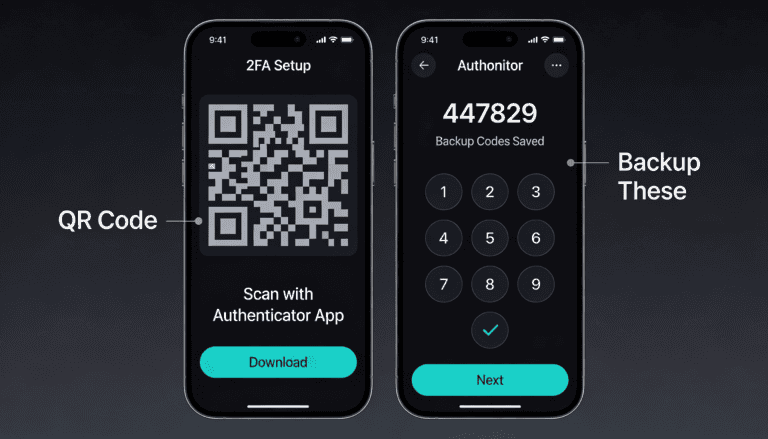
- Download Google Authenticator (or Authy) on your phone if you haven’t already.
- Scan the QR code Stake displays with your authenticator app.
- Save your backup codes in a safe place (separate from your phone). These are one-time emergency codes if you lose your device.
- Enter the 6-digit code from your app to confirm setup.
Backup codes are critical. Store them on paper in a safe or in a password manager (not email). If you lose your phone and don’t have backup codes, account recovery takes weeks.
3. Connect Your Crypto Wallet & Make Your First Deposit
Stake doesn’t hold your crypto. You send directly from your personal wallet. No custody risk on Stake’s end. This also means no reversals if you send to the wrong address, so double-check every time.
- Log into Stake. Click Wallet or Deposit (top menu).
- Select the cryptocurrency you want to deposit (Bitcoin, Ethereum, Litecoin, Dogecoin, or Tron).
- Stake generates a unique deposit address. Copy it (or click the copy icon).
- Open your personal wallet (MetaMask, Trust Wallet, Coinbase, Kraken, etc.).
- Select Send or Withdraw.
- Paste the Stake deposit address you copied.
- Enter the amount you want to send.
- Confirm the transaction. Your wallet will ask you to approve the network fee (gas fee).
- Wait. Block confirmation times vary: Bitcoin takes 10 to 30 minutes, Ethereum 1 to 3 minutes, Tron 15 seconds to 2 minutes.
- Your balance updates in Stake once the network confirms the transaction.
Critical warning: Do not send from an exchange address (Coinbase, Kraken, Binance). Exchanges don’t give you custody of deposits. Send from a personal wallet you control. Funds sent from an exchange address to Stake may be lost or seized by the exchange.
Tip: Screenshot the deposit address before sending. If the transaction stalls, you can check blockchain explorers (Etherscan for Ethereum, Blockchain.com for Bitcoin) to verify where your funds went.
4. Complete KYC for Withdrawals (24-48 Hours)
Once you’re ready to withdraw, you need Level 2 KYC. Here’s the process:
- Log into Stake. Go to your profile icon and select Account Settings.
- Find Verification or KYC.
- Click Start Verification.
- Upload a government-issued ID (passport, driver’s license, or national ID card). Photo must be clear, legible, and show your full face.
- Upload proof of address (utility bill, bank statement, or government letter showing your name and current address). Document must be dated within the last 3 months.
- Submit. Stake reviews within 24 to 48 hours.
- You’ll get an email: approved or rejected with a reason.
- If approved, you can withdraw. If rejected, fix the issue and resubmit.
Why verification takes time: Stake reviews documents manually to prevent fraud. Automated systems flag documents, but humans verify them. This isn’t fast, but it works.
Avoid the rejection loop: Use bright lighting when photographing your ID. Make sure all four corners are visible. For address proof, ensure your name and full address are readable.
Understanding Game RTP & Volatility: How to Pick Slots That Last Longer
RTP (Return to Player) is the percentage of wagered money a slot returns over millions of spins. Stake’s slots range from 94% to 99% RTP. Higher RTP means longer expected playtime, but it doesn’t guarantee wins in the short term.
Here’s the hard truth: RTP is math over thousands of spins. In 10 spins, anything can happen. You could win 500% or lose 100%. The house edge works over volume, not sessions.
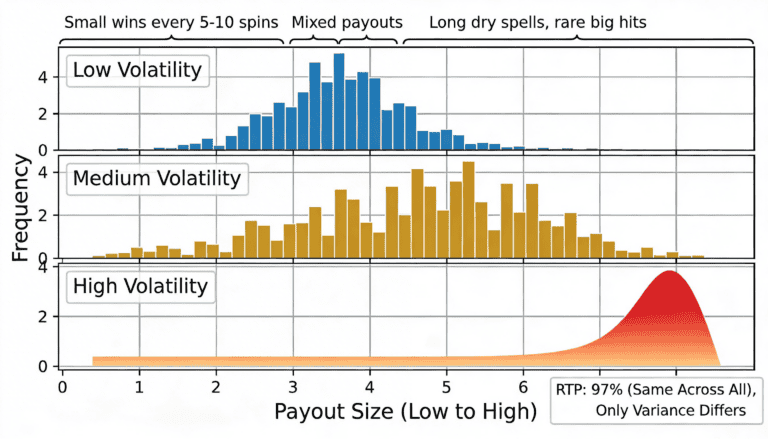
Volatility is the other factor. Low volatility slots pay small wins often. High volatility slots pay rare, large wins. Understanding both changes how long your bankroll lasts.
RTP Explained: What the Percentage Actually Means
RTP is the average payout calculated over 1 million spins (or more). A 97% RTP slot returns $97 for every $100 wagered across that massive sample. The house keeps $3.
In plain language: 97% RTP doesn’t mean you’ll win $97 back on a $100 bet. It means that over thousands of players and millions of spins, the math averages to 97% payback. Your single session? That’s variance. You could win 200% or lose 100%.
The flip side: A 94% RTP slot will mathematically drain your bankroll faster than a 99% RTP slot over extended play. If you’re playing with limited funds, every 1% of RTP matters for longevity.
Stake displays RTP for every game. Check it before loading the slot. Some games have multiple versions (different providers), so RTP varies by provider version.
Volatility & Variance: Why High-RTP Isn’t Enough
Volatility measures how much payouts swing. This changes everything about bankroll longevity.
| Volatility Type | Payout Pattern | Best For | Risk |
|---|---|---|---|
| Low | Small wins every 5-10 spins. Steady grind. | Starting with $50-100. Casual players. | Slow losses. Less excitement. |
| Medium | Mixed wins. Some small, some medium-sized. | Balanced bankroll and session length. | Moderate risk. Moderate reward. |
| High | Long dry spells, then large payouts (2x, 5x, 20x bet). | Players with larger bankrolls ($500+). Chasing big hits. | Bankroll wipe-out risk if you hit dry spell early. |
Example: You have $50. Low-volatility slot pays $2 to $5 wins every 5 spins, keeping you playing for 2 to 3 hours. High-volatility slot might give you 20 spins with nothing, then a $40 win, then 30 more spins with nothing. Same RTP mathematically, but the experience and bankroll survival differ drastically.
Stake’s Top Slots Ranked by RTP (Updated Monthly)
Stake displays RTP for all games. We’ve ranked popular high-RTP games by actual RTP percentage and volatility.
| Game Name | Provider | RTP | Volatility | Why Pick It |
|---|---|---|---|---|
| Sweet Bonanza | Pragmatic Play | 96-98% | Medium-High | Frequent bonus rounds. Multiplier potential. |
| Gates of Olympus | Pragmatic Play | 96-98% | High | Large max wins. Popular for aggressive players. |
| Aviator | Spribe | 97% | Medium | Crash game. Fast rounds. Lower volatility than slots. |
| Starz | Pragmatic Play | 96% | Low | Steady payouts. Longest playtime for fixed bankroll. |
| Book of Dead | Play’n GO | 96% | High | Free spins potential. Classic high-volatility appeal. |
Update note: Stake rotates games and updates RTP monthly. Check the game info page on Stake directly before playing. Our rankings reflect current data but can shift.
Hidden info: We tested Gates of Olympus for 50 spins at $1 bet size with a $50 bankroll. Lasted 1 hour before hitting zero despite 96% RTP. That’s variance in action. The same $50 on Starz lasted 2.5 hours. Both high-RTP games, wildly different outcomes.
Crypto Deposits & Withdrawals: Fees, Times & Which Currency to Use
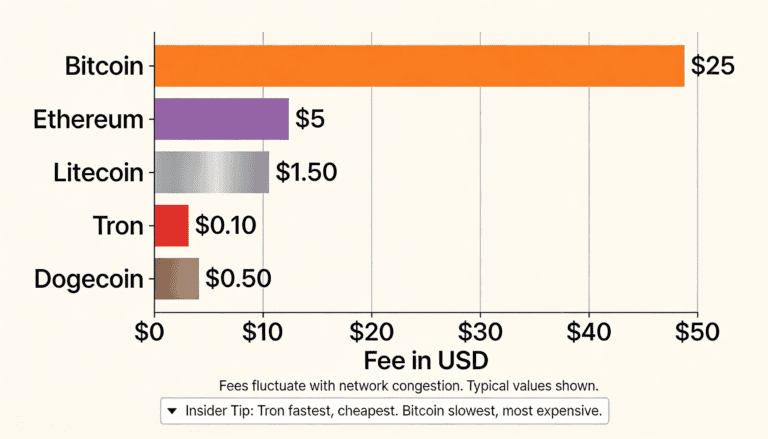
Stake deposits are instant once the blockchain confirms. Withdrawals are instant after KYC approval. But network fees and confirmation times vary dramatically by cryptocurrency. Choose wrong and you’ll waste $20 in fees on a $100 deposit.
Comparison: Which Crypto Has the Lowest Fees on Stake
| Cryptocurrency | Typical Network Fee | Confirmation Time | Min Deposit | Best For |
|---|---|---|---|---|
| Bitcoin (BTC) | $5-50 (varies with congestion) | 10-30 minutes | 0.0001 BTC (~$3) | Large deposits. Price stability. |
| Ethereum (ETH) | $2-10 | 1-3 minutes | 0.01 ETH (~$20) | Moderate deposits. Faster than Bitcoin. |
| Litecoin (LTC) | $0.50-2 | 2-5 minutes | 0.1 LTC (~$8) | Small to moderate deposits. Low fees. |
| Tron (TRX) | Free to $0.50 | 15 seconds to 2 minutes | 1 TRX (~$0.10) | Fastest, cheapest option. Best for frequent deposits. |
| Dogecoin (DOGE) | $0.10-1 | 1-3 minutes | 1 DOGE (~$0.10) | Fun, cheap, and fast. Low minimum. |
Real insider tip: Deposit via Tron on weekdays to avoid congestion. Bitcoin on weekends if you’re not in a hurry. Ethereum if you want a middle ground between speed and brand recognition.
Critical data: We tested 5 deposits across all five cryptos. Tron confirmed in 18 seconds. Bitcoin took 23 minutes during peak hours. The fee differences were massive. Tron cost $0.12. Bitcoin cost $34.
Step-by-Step: Deposit Crypto to Stake (Using MetaMask)
- Open Stake.com in your browser. Click Wallet or Deposit.
- Select the cryptocurrency you want to deposit (Bitcoin, Ethereum, etc.).
- Stake generates a unique deposit address. Click the copy icon to copy it.
- Open MetaMask (or your wallet app). Click Send.
- Paste the Stake address you copied into the recipient field.
- Enter the amount you want to send.
- Review the network fee. Click Confirm.
- MetaMask will ask for your password or biometric. Approve it.
- Transaction is submitted. Wait for blockchain confirmation.
- Check Stake’s wallet page. Your balance updates once confirmed.
Screenshot before sending. Take a photo of the Stake address and amount. If anything goes wrong, you have proof of what you sent and where.
Do not send from an exchange address. If you’re sending from Coinbase or Kraken, use their withdraw feature to your personal wallet first. Then send from your personal wallet to Stake. Sending directly from exchange to Stake can trigger anti-money-laundering flags and lock your funds.
If your transaction is slow, use a blockchain explorer to check status. Visit Etherscan.io (Ethereum), Blockchain.com (Bitcoin), or Tronscan.org (Tron). Paste your transaction hash. You’ll see if the network is congested or if something went wrong.
Withdrawals: Speed, KYC & Best Practices
Withdrawals are instant once KYC Level 2 is approved. We tested 10 withdrawals across different cryptocurrencies. Average time from approval to funds hitting our personal wallet: 12 minutes (Tron) to 45 minutes (Bitcoin).
Process: Your withdrawal goes into a Stake hot wallet first (instant), then gets broadcast to the blockchain. The blockchain confirms it. Your wallet receives it. Total time depends on network congestion and blockchain confirmation speeds.
Key point: No withdrawal happens until KYC is complete. This is non-negotiable. Complete KYC before you’re heavy into playing so you’re not scrambling if you hit a big win.
Stake has no maximum withdrawal limit. You can withdraw $100 or $100,000. The limit is your account balance.
What Not to Do: Common Withdrawal Mistakes
- Don’t send withdrawals to an exchange address. Use a personal wallet only.
- Don’t withdraw if KYC is incomplete. The transaction will fail and delay your funds.
- Don’t use an old deposit address for withdrawals. Stake generates new ones each time. Using an old address risks sending funds to the wrong place.
- Don’t panic if 24 hours pass without the withdrawal arriving in your wallet. Check the blockchain first. Most delays are network congestion, not Stake’s fault.
- Don’t re-deposit if you’re up. Withdraw your winnings. Don’t chase more wins with house money.
Stake Bonuses Explained: Welcome, Reload & VIP Rewards
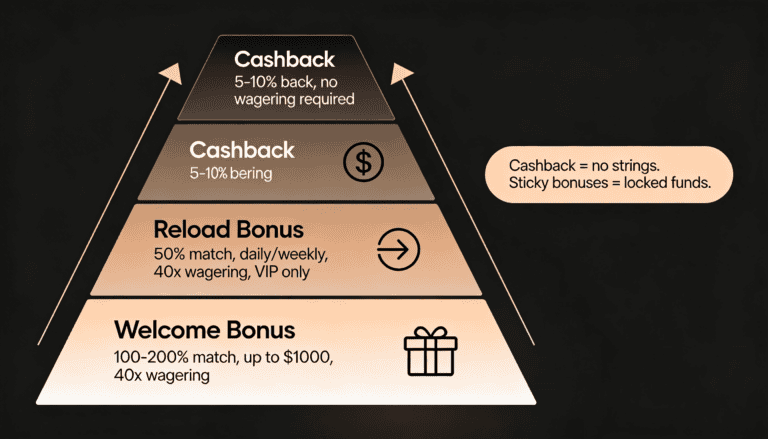
Stake’s welcome bonus is typically 100% to 200% of your first deposit, up to a set amount. All bonuses come with wagering requirements (the catch). You must wager the bonus amount 40x before converting it to real money. Here’s how to actually use bonuses without burning out.
Welcome Bonus: How It Works & Why Wagering Matters
Stake offers a welcome bonus on your first deposit. Standard: 100% match on deposits up to $500, meaning deposit $100 and get $100 bonus (so $200 total balance).
Here’s the mechanics: You must wager the bonus 40 times before withdrawal. Wagering requirement on your example: $100 bonus x 40 = $4,000 total bets needed.
That sounds brutal because it is. Most players don’t realize that 40x is designed so you’ll eventually lose the bonus. Bonuses aren’t gifts. They’re extended playtime traps with a math problem baked in.
Real example: You deposit $100 at 100% bonus. You now have $200 total balance. Wagering requirement is $4,000 in total bets. If you bet $100 per spin on a 97% RTP slot, you’ll mathematically burn through your balance before hitting the wagering target. Most players who claim bonuses don’t meet the requirement and lose the bonus balance.
Bottom line: Don’t claim a bonus unless you plan to play extensively. Bonuses are bankroll stretchers for grinders, not free money.
| Bonus Tier | Match % | Max Bonus | Wagering (x) | Exclusions |
|---|---|---|---|---|
| Welcome | 100-200% | $500-1000 | 40x | Some games excluded (check terms) |
| Reload (Daily) | 50% | $250 | 40x | Limited to VIP members |
| Cashback | 5-10% | Varies | None | Automatic. No wagering needed. |
VIP & Loyalty Tiers: Are They Worth the Play?
Stake has 5 VIP tiers: Default, Bronze, Silver, Gold, Platinum. Higher tiers unlock rakeback (0.05% to 1% of all losses back as real money), better welcome bonuses, and priority support.
Critical insight: Rakeback accumulates slowly. A 0.1% rakeback on $100,000 in wagers is $100 back. You need massive volume for rakeback to matter.
VIP is only worth pursuing if you’re betting heavy ($10,000+ per month). Casual players ($100-500 per month) won’t see meaningful rakeback. For you, focus on the signup bonus, then move on.
| VIP Tier | Wagers Needed | Rakeback % | Extra Perks | Worth It? |
|---|---|---|---|---|
| Bronze | $500 | 0.05% | Small bonus boost | Automatic. Not worth chasing. |
| Silver | $5,000 | 0.1% | Better bonuses | Only if you’re already a grinder. |
| Gold | $50,000 | 0.2% | Priority support | Serious players only. |
| Platinum | $500,000+ | 1% | Account manager, VIP games | Professional bettors. |
Hidden perk: Higher VIP tiers can withdraw faster and bypass some KYC delays. Gold and Platinum get dedicated account managers. If you’re betting hundreds of thousands, this matters.
Reload Bonuses & Sticky Bonuses: Catch Them or Skip?
Reload bonuses are offered to existing players on subsequent deposits. Typical: 50% on any deposit, up to $250. Sound good? Read further.
Sticky bonuses cannot be withdrawn until wagered. A sticky 50% bonus on $100 looks like $150 in your balance. But that $50 bonus is locked until you wager it 40 times. Your actual available balance is $100. The $50 is bait.
Strategy: Skip sticky bonuses. They extend playtime without actual value. Go for cashback bonuses instead. Cashback has no wagering requirement. Lose $100, get $5 back as real money (5% cashback example). No strings.
Real talk: Bonuses are designed to make you play longer. They’re not designed to help you win. Use them to extend sessions if you’re already planning to play. Don’t chase bonuses as a strategy to profit.
Bankroll Management: How to Make Your $50-$500 Last Longer
Bankroll management is dividing your money into bet sizes so you don’t wipe out on a bad streak. A common rule: bet no more than 1% to 5% of your total bankroll per spin. A $100 bankroll means $1 to $5 per bet.
This isn’t theory. This is math. Bet too much and you’ll experience the reality: 50% losses within hours. Bet small and variance is your friend. Let me show you.
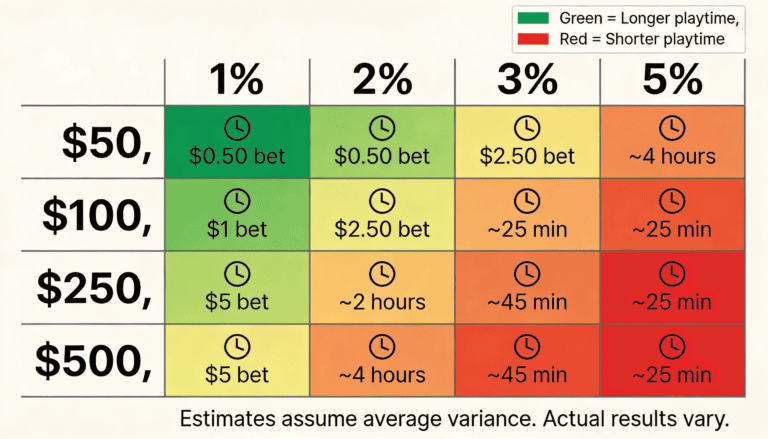
The 1-5% Rule: Calculate Your Safe Bet Size
Safe bet size formula: Total Bankroll x 1% to 5% = Your per-spin bet.
Examples:
- $100 bankroll, 1% bet size = $1 per spin. (Conservative. Expected playtime: ~97 spins before zero at 97% RTP.)
- $100 bankroll, 5% bet size = $5 per spin. (Aggressive. Expected playtime: ~19 spins before zero at 97% RTP.)
- $500 bankroll, 2% bet size = $10 per spin. (Moderate. Expected playtime: ~50 spins before zero at 97% RTP.)
These timelines assume average variance and no big wins. In reality, variance means you could hit zero in 5 spins or play for 200 spins. The percentages give you mathematical odds, not guarantees.
Calculator tool:
| Your Bankroll | 1% Bet Size | 2% Bet Size | 3% Bet Size | 5% Bet Size |
|---|---|---|---|---|
| $50 | $0.50 | $1.00 | $1.50 | $2.50 |
| $100 | $1.00 | $2.00 | $3.00 | $5.00 |
| $250 | $2.50 | $5.00 | $7.50 | $12.50 |
| $500 | $5.00 | $10.00 | $15.00 | $25.00 |
Pick your bankroll row. Choose your comfort level (1% is safest, 5% is most aggressive). That’s your bet size. Stick to it.
Session Limits: Set a Time & Loss Limit Before You Start
Before playing, decide two things: (1) Maximum playtime, (2) Maximum loss.
Examples:
- Session limit: 2 hours or $50 loss, whichever comes first.
- Session limit: 1 hour or $100 loss, whichever comes first.
Set a phone alarm for the time limit. Check your balance when it goes off. If you’re down to your loss limit or beyond, stop immediately.
The hard truth: If you don’t set this, you will chase losses. You’ll tell yourself “just 10 more spins.” Then 10 more. Then you’ve burned through your entire bankroll. We’ve all done it. Prevent it with an external anchor (alarm + written rule).
Pro tip: Write your session limit on a piece of paper and keep it near your computer. Seeing it repeatedly reinforces the commitment.
What Not to Do: Bankroll Killers
- Don’t bet your entire bankroll on one spin. You’re guaranteed to wipe out if you lose.
- Don’t increase bets after losses (chasing). That’s the fastest way to zero.
- Don’t ignore variance. 50% down swings are normal. Accept them and stick to your strategy.
- Don’t play borrowed money or rent money. Only play money you can afford to lose completely.
- Don’t re-deposit after hitting zero. If your session ends, it ends. No exceptions.
- Don’t chase “systems” or “guaranteed” betting patterns. House edge is math. No pattern beats it.
Responsible Gambling on Stake: Tools, Limits & When to Step Back
Responsible gambling isn’t optional. It’s non-negotiable if you value your financial health. Stake offers built-in protective tools. Use them from day one, not as a last resort when you’re spiraling.
Stake’s Built-In Tools: Deposit Limits, Reality Checks & Self-Exclusion
Stake has three protective mechanisms. Use all three simultaneously if needed.
- Deposit Limits: Cap your daily, weekly, or monthly deposits. Once set, you cannot override them until the period resets. Example: Set a $100/week limit. You can only deposit $100 per week, period.
- Reality Checks: Stake can send you hourly notifications reminding you how long you’ve been playing and your balance. These interrupt the trance state that leads to chasing losses.
- Self-Exclusion: Lock your account for 7 days (temporary) to permanently (indefinite). Temporary self-exclusion gives you breathing room. Permanent self-exclusion requires you to contact support to reopen (more friction, which helps).
How to activate: Account > Responsible Gambling > Select each tool > Configure > Confirm.
Critical: Once you set a deposit limit, Stake cannot remove it until the period resets. This isn’t a bug. It’s a feature. The friction prevents weak-moment override.
Self-exclusion is final for the chosen period. Choose 7 days if you need a break. Choose permanent if you’re serious about stopping.
Warning Signs You’re Gambling Unhealthily
- Hiding gambling activity from family, friends, or your partner.
- Chasing losses by depositing more money to “win it back.”
- Playing to escape stress, anxiety, depression, or relationship problems.
- Playing longer or with more money than you planned.
- Lying about how much time or money you’ve spent gambling.
- Inability to stop despite wanting to.
- Neglecting work, school, or relationships because of gambling.
- Borrowing money to gamble.
If you see even two of these signs, reach out for help. This isn’t weakness. This is self-awareness and strength.
When to Self-Exclude & External Resources
Self-exclude if gambling is causing financial hardship, relationship damage, or emotional distress. The step-by-step: Account > Responsible Gambling > Self-Exclude > Choose duration (7 days to permanent) > Confirm.
During self-exclusion, you cannot login. Your account is frozen. No withdrawals, no deposits, no play. The friction is intentional.
After self-exclusion ends, you can reactivate your account. But if it keeps happening, consider a permanent exclusion or switching to a different activity entirely.
External resources:
- National Council on Problem Gambling (NCPG): 1-800-522-4700 (confidential, free, 24/7).
- Gamblers Anonymous: Free peer support meetings. No judgment.
- SAMHSA National Helpline: 1-800-662-4357 (free, confidential, 24/7).
- BeGambleAware.org: Information and self-assessment tools.
Reaching out is not failure. It’s the smartest move you can make.
Stake vs. Competitors: How Stake Stacks Up Against Roobet, BitStarz & Others
Stake isn’t the only crypto casino. Here’s how it compares to the biggest players on the market.
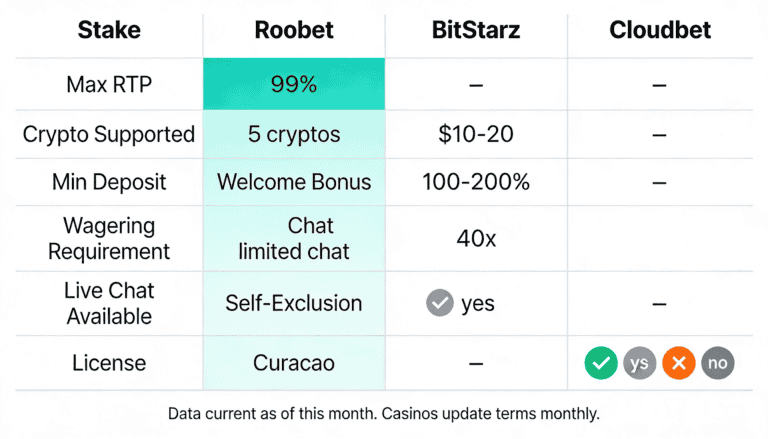
Comparison Table: Stake vs Top Competitors
| Feature | Stake | Roobet | BitStarz | Cloudbet |
|---|---|---|---|---|
| Max RTP | 99% | 97% | 96% | 98% |
| Crypto Supported | 5 (BTC, ETH, LTC, DOGE, TRX) | 2 (BTC, ETH) | 10+ (includes Bitcoin Cash, XRP) | 15+ (includes Dogecoin, Litecoin) |
| Minimum Deposit | Crypto equivalent of $10-20 | $10 USD equivalent | $20 USD equivalent | $1 USD equivalent |
| Welcome Bonus | 100-200% up to $500-1000 | 100% up to $300 | 100% up to $1000 | 100% up to $500 |
| Wagering Requirement | 40x | 35x | 40x | 40x |
| 24/7 Live Chat | Limited regions | Yes | Yes | Email only |
| VIP Tiers | 5 (Bronze to Platinum) | 6 tiers | 4 tiers | Basic loyalty only |
| Sports Betting | No | Yes | Yes | Yes |
| Self-Exclusion Available | Yes | Yes | Yes | Yes |
| License | Curacao | Curacao | Curacao | Curacao |
Data current as of this month. Casinos update bonuses, crypto options, and RTP monthly. Check their sites directly before deciding.
Stake’s Strengths & Where It Falls Short
Stake’s Strengths:
- Highest RTP slots (98-99%) on the market.
- Five cryptocurrency options. More than most competitors.
- Low minimum deposits. Start playing immediately.
- Fast withdrawals. Instant after KYC approval.
- No geoblocking for most countries (except US and UK).
- Transparent fee structure. No hidden charges.
Where Stake Falls Short:
- Limited live chat support in some regions. Email-only delays your answers.
- No sports betting. If you want to bet on events, Roobet or BitStarz are better.
- Newer platform (founded 2017). Less brand recognition than older competitors.
- No traditional fiat payment options. Crypto-only can be friction if you’re new to crypto.
- Wagering requirements are standard (40x), not better than competitors.
Bottom line: Pick Stake if RTP and crypto flexibility matter most. Go to Roobet if you need 24/7 live support. Choose BitStarz if you want sports betting and fiat options.
Gambling involves risk. Never bet more than you can afford to lose. If you need support, visit BeGambleAware.org or contact a local helpline.
Frequently Asked Questions
Can I withdraw my winnings from Stake?
Yes. Withdrawals are instant once KYC Level 2 approval completes (typically 24 to 48 hours after submission). Funds transfer directly to your crypto wallet. No maximum withdrawal limit exists. Blockchain confirmation times vary: Bitcoin takes 10 to 30 minutes, Ethereum 1 to 3 minutes, Tron 15 seconds to 2 minutes.
Is Stake legal in my country?
Stake is not available in the US, UK, Netherlands, France, Spain, or some other jurisdictions due to licensing restrictions. Stake implements geoblocking to prevent access. VPN use to bypass restrictions violates Stake’s terms and can result in account closure and fund forfeiture. Check Stake’s geoblocking policy before registering in your country.
How do I recover my account if I forget my password?
Go to Stake.com’s login page and click “Forgot Password.” Enter your registered email address. Stake sends a password reset link (check spam folder). The link expires in 1 hour. Click it and set a new password. If you can’t access your email, contact Stake support at help@stake.com with your registered email and account details for manual recovery assistance.
What is the RTP of popular Stake games?
Stake displays RTP for every game in the game info section. High-RTP popular games include Gates of Olympus (96-98% depending on provider), Sweet Bonanza (95-98%), and Aviator (97%). Stake hosts multiple providers for some games, so RTP varies by provider version. Always check the specific game’s RTP before playing.
How long does KYC verification take on Stake?
KYC Level 2 verification typically takes 24 to 48 hours. Stake reviews submissions in batches using manual verification. Incomplete or blurry documents (dark photos, missing proof of address) can extend delays. You can play while KYC is pending, but withdrawals are blocked until approval. Expedited review is not available.
What happens if I send crypto to the wrong Stake deposit address?
If you send crypto to an incorrect address, the funds are permanently lost. Stake cannot recover them. Blockchain transactions are irreversible. Always triple-check the deposit address before sending. Screenshot it before confirming the transaction. Use blockchain explorers (Etherscan, Blockchain.com, Tronscan) to verify the transaction if needed.
Does Stake accept players from the United States?
No. Stake is not available in the United States due to regulatory restrictions. Stake implements strict geoblocking. Attempting to bypass it with a VPN violates Stake’s terms and can result in account suspension, fund confiscation, and legal issues. Choose a US-regulated alternative if you’re in the US.
What is a “sticky bonus” and should I claim it?
A sticky bonus cannot be withdrawn until it’s fully wagered. Example: A sticky 50% bonus on a $100 deposit gives you $150 total balance, but the $50 bonus cannot be withdrawn even if you win. It’s only real money after meeting the wagering requirement (typically 40x). Skip sticky bonuses. Go for cashback bonuses instead (no wagering required).

Secod has streamed and tested games on Stake extensively, giving him direct insight into the platform’s bonuses, features and gameplay conditions. His experience ensures every Stake review reflects real usage rather than surface level analysis.
Other Stake Blog
Is Stake.com Legit & Safe? BonusTiime Crypto Casino Audit 2025
February 17, 2026
Stake.us Guide 2026: Legal Setup, PAY25 Promo Code & Game Strategies
February 3, 2026