




+18 - Check if the casino you want to register with is eligible in your country.
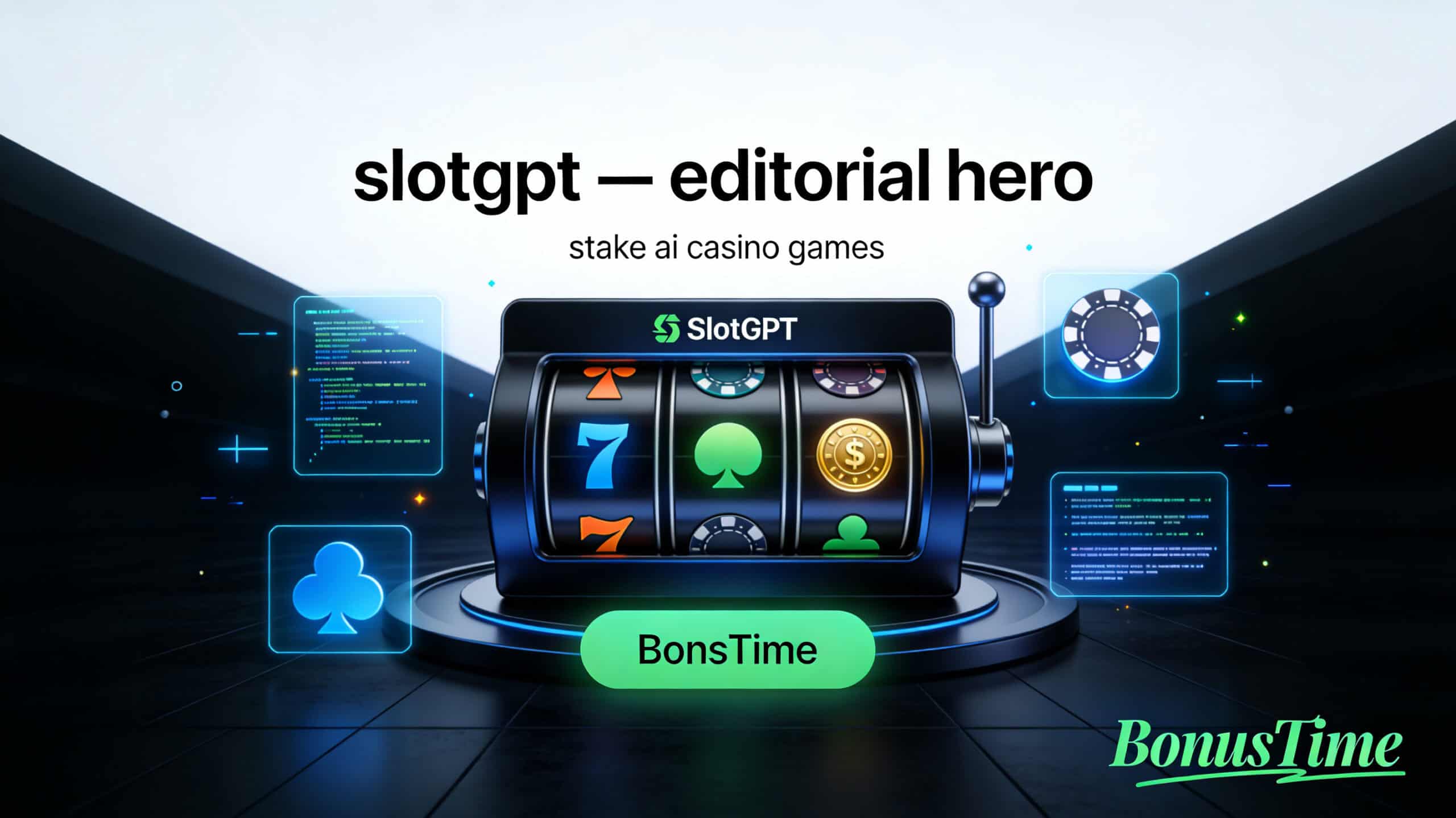
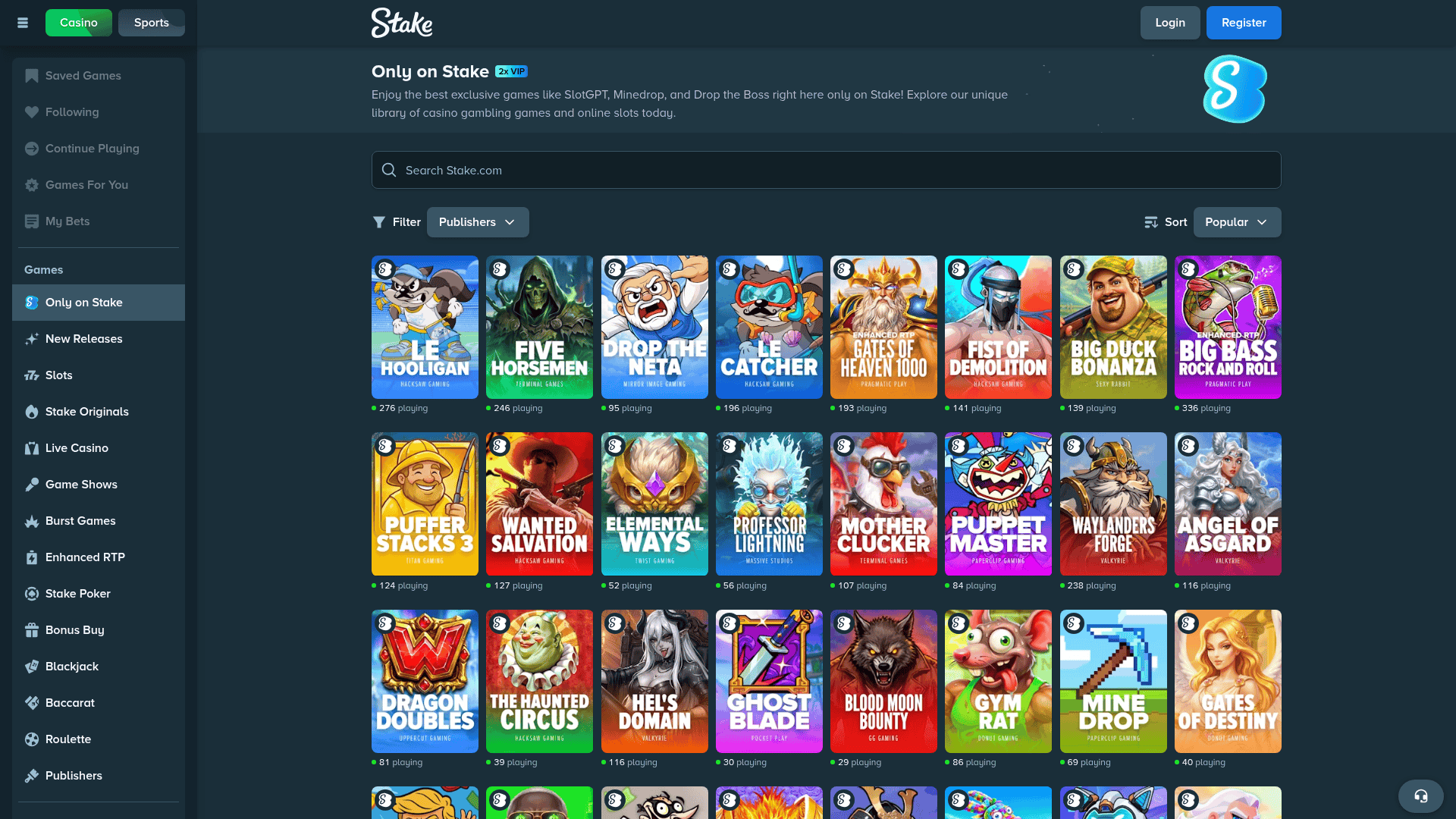
SlotGPT is a Stake.com-exclusive lobby where players type text prompts to generate fully playable AI-built slot games, complete with custom themes, symbols, and real-money wagering, without any coding knowledge required. You enter a description like “neon Tokyo cyberpunk with dragon symbols,” and within seconds, the AI renders a complete slot machine with paylines, reel symbols, and bonus mechanics. The game goes live immediately in your account and can be shared with the Stake community.
This represents a fundamental shift in how Stake positions itself. Rather than licensing slots from Pragmatic Play or Hacksaw Gaming, Stake now lets its player base generate content. The platform handles all backend math, licensing compliance, and provably fair verification. Your job is purely creative input.

SlotGPT sits in its own dedicated lobby, separate from Stake Originals and licensed third-party games. When you create a slot, it appears in your personal library first, then can be published to the community feed. Other players can play your creation, rate it, and share it. All wagering on your slot flows through Stake’s house edge model, not a revenue-share with you.
Stake Originals are proprietary games built by Stake’s in-house team with fixed themes and mechanics. SlotGPT games are user-generated but use the same underlying RTP engine. The key difference: Stake Originals have months of testing and refinement; SlotGPT games are generated on demand. This speed comes with a trade-off in mechanical depth and visual polish.
You type a theme prompt, choose basic parameters, and SlotGPT’s AI generates a slot with matching symbols, paylines, and mechanics, but the underlying math model is Stake’s, not yours, capping true creative control. The process takes 30 to 90 seconds from prompt submission to a playable game. You can then wager real money on your own creation or share it for others to play.
The AI doesn’t build the game from scratch. It selects from Stake’s template library, applies your theme to symbols and backgrounds, and assigns payline configurations from a predefined set. This is why generated slots feel mechanically similar despite visual variety.
Log into Stake, navigate to the SlotGPT lobby, and click “Create New Game.” A text input field appears. Type your theme description. The AI processes your input and generates a preview within 60 seconds. Review the output, name your slot, and publish. It’s live immediately.
Choosing a Theme Prompt That Actually WorksSpecific, visual prompts outperform vague ones. “Neon Tokyo cyberpunk with dragon symbols and gold accents” generates more distinctive output than “Asian theme.” Include color palettes, mood descriptors, and symbol types. Avoid requests for specific RTP or volatility; the AI ignores those parameters entirely.
Understanding the 55-Slots-Per-Day Generation LimitStake caps creation at 55 slots per day per account to prevent spam and server load. This limit resets at midnight UTC. If you hit the cap, you must wait until the next day to generate more. Premium or VIP accounts may have higher limits, though Stake has not publicly confirmed tier-specific thresholds.
The AI controls visual theming, symbol design, reel count, and payline layout. It does not control RTP, volatility, max win multiplier, or bonus trigger probability. These are hardcoded by Stake’s engine and applied uniformly across all SlotGPT games regardless of theme.
Fixed RTP and Max Win Caps You Cannot OverrideEvery SlotGPT game ships with an RTP between 96% and 98%, set by Stake. Max win is capped at 5,000x your bet. Bonus frequency and size follow Stake’s template rules. No prompt modification changes these parameters. This is the core limitation: you’re customizing the skin, not the skeleton.
Early user feedback from community forums indicates significant mechanical repetition. Players report that most AI-generated slots feel like reskins of the same 5 to 10 underlying payline structures. Bonus features are sparse and follow identical trigger patterns. Visual novelty masks mechanical sameness. This is a documented pain point affecting retention.
Every SlotGPT creation passes Stake’s moderation before going live. Stake retains platform rights to all generated games, your slot drives house-edge wagering volume that benefits Stake, not you. This is the business model: you provide creative labor, Stake captures all revenue and retains perpetual rights to the game.
Moderation typically takes 2 to 24 hours. Rejected games are removed from your library with a brief reason (offensive imagery, copyright violation, etc.). Approved games remain live indefinitely unless Stake removes them for policy violations.
Stake’s moderation team flags slots with trademarked characters, explicit imagery, or hateful symbols. Prompts requesting “guaranteed wins” or “rigged in your favor” are rejected. Themes referencing real-world violence or illegal activities are removed. The process is opaque; Stake does not publish detailed moderation guidelines for SlotGPT.
Stake owns the game. You retain no intellectual property rights. Stake can modify, remove, or republish your slot without compensation. Your only right is to delete it from your personal library, but Stake retains a copy if it’s been played by others. This is standard for user-generated content platforms.
Stake monetizes SlotGPT through volume. Every wager on a SlotGPT game generates house edge revenue for Stake. The platform benefits from increased player engagement (more time in-app, more sessions) and reduced content licensing costs. You provide the creative input; Stake captures 100% of the upside. This is not a revenue-share model.
Specific, visual prompts with clear themes like “neon Tokyo cyberpunk with dragon symbols” outperform vague inputs, but volatility, RTP, and bonus mechanics remain locked by Stake regardless of prompt detail. The AI responds to descriptive language, not mathematical parameters. Think like a game designer pitching a visual concept, not a programmer requesting code.
Successful prompts include color schemes, mood descriptors, symbol types, and cultural references. “Ancient Egyptian tomb with scarab beetles, gold hieroglyphics, and sandstone textures” generates more cohesive output than “Egypt slot.” Avoid contradictions. Requesting both “minimalist” and “ornate” confuses the AI and produces inconsistent results.
Start with a setting or era. Add visual elements. Specify a color palette. Include a mood or atmosphere. Example: “1920s speakeasy with art deco design, gold and black accents, jazz club vibe, playing card symbols.” This structure gives the AI clear constraints and produces more distinctive output than stream-of-consciousness descriptions.
You cannot request specific RTP percentages, volatility levels, or bonus frequencies. You cannot request guaranteed wins, rigged outcomes, or player-favorable math. You cannot override Stake’s max win cap or minimum bet requirements. These are architectural constraints, not limitations of the AI’s understanding. Prompts requesting them are either ignored or rejected during moderation.
Stake runs periodic SlotGPT contests where top-rated community slots win prizes, but participation is free to enter while requiring active wagering on the platform, making the real cost higher than it appears. Contests typically run for 2 to 4 weeks. Winners are determined by community ratings, play count, or Stake’s editorial selection. Prizes range from bonus credits to tournament entries.
The hidden cost is wagering. To rank your slot competitively, you need other players to wager on it. This requires promotion, community engagement, or luck. Most players who win contests have spent hundreds or thousands in wagering to build visibility. The prize rarely offsets the cost.
Players can rate SlotGPT games from 1 to 5 stars. Ratings appear on the game card in the community lobby. You can share your slot via direct link or social media. Sharing does not grant you commission or revenue; it’s purely for visibility. Stake tracks play count and engagement metrics but does not publish these to creators.
A typical contest offers 100 to 500 USD in bonus credits to top 10 winners. To reach top 10, your slot needs 500+ plays and a 4.5+ star rating. Achieving this typically requires 2,000 to 5,000 USD in personal wagering to drive visibility and engagement. The math rarely favors the creator.
SlotGPT games offer novelty and creative engagement but carry the same house edge as Stake Originals, with less proven volatility data than licensed slots from established providers like Pragmatic Play or Hacksaw. Each category serves a different player need. SlotGPT is for novelty seekers. Stake Originals are for players who want refined, tested mechanics. Licensed slots are for players who want industry-standard games with transparent RTP history.
| Attribute | SlotGPT | Stake Originals | Licensed Slots (Pragmatic Play, Hacksaw) |
|---|---|---|---|
| RTP Range | 96% to 98% | 96% to 98% | 94% to 98% (varies by provider) |
| Volatility Transparency | Not disclosed | Disclosed in game info | Disclosed in game info |
| Bonus Feature Depth | Minimal, repetitive | Moderate, tested | High, refined |
| Provably Fair Verification | Yes, Stake’s engine | Yes, Stake’s engine | Yes, provider’s engine |
| Play History Data | Limited | Extensive | Extensive (industry-wide) |
| Availability | Stake.com only | Stake.com only | Multiple platforms |
Play SlotGPT if you value creative novelty and don’t mind mechanical repetition. Play Stake Originals if you want refined mechanics with Stake’s quality control. Play licensed slots if you want industry-standard games with transparent volatility data and multi-platform play history. SlotGPT is entertainment first, gambling second. Licensed slots are the opposite.
SlotGPT is only available on Stake.com, which operates under a Curacao license and is not licensed in France or most regulated EU markets. Stake.com is blocked in France, Germany, Italy, Spain, and other EU jurisdictions that require local gambling licenses. VPN access may bypass geo-blocking but violates Stake’s terms and local gambling laws.
Curacao licensing does not grant Stake legal status in regulated markets. French players face potential legal consequences for wagering on Stake, including account seizure and fines. The platform is not monitored by French gambling regulators.
Stake holds a license from the Curacao Gaming Authority (license number 365/JAZ). This license is valid in jurisdictions that recognize Curacao licensing but is explicitly rejected in France, Germany, Belgium, Netherlands, and most EU member states. Stake.com is geo-blocked in these regions, though determined players can bypass blocks using VPNs.
Accessing Stake.com from France or the EU via VPN is technically possible but legally risky. French gambling law prohibits unlicensed platforms. Winnings may not be legally enforceable. Account seizure is possible if authorities detect activity. Licensed alternatives like Winamax, PokerStars, and Unibet operate legally in France and offer similar games with regulatory oversight.
The creative loop of building and playing your own slot accelerates session length and spending. Set deposit limits before engaging with SlotGPT. The psychological hook is stronger than standard slots. You’ve invested creative effort in the game, so you’re more likely to keep playing it. This is a documented engagement tactic in user-generated content platforms.
Stake provides deposit limits, loss limits, and self-exclusion tools. Use them before playing SlotGPT. If you need support, contact the French gambling helpline at 09 74 75 13 13 or visit Gamblers Anonymous France.
Creating a slot triggers a sense of ownership and investment. You’re more likely to play a game you’ve built than a random slot from the library. This is the sunk-cost fallacy in action. This psychology increases session time and wagering volume. Be aware of this dynamic and set strict session limits.
Stake offers deposit limits (daily, weekly, monthly), loss limits, session time limits, and self-exclusion. These tools are accessible in account settings. Use them proactively. Stake also displays responsible gambling messaging and links to support resources. However, these are reactive, not preventive. Your discipline matters more than the platform’s tools.
SlotGPT is an AI-powered slot generator exclusive to Stake.com. You type a theme description, and the AI creates a fully playable slot game with custom symbols, paylines, and real-money wagering enabled. Games are published to a community lobby where other players can play and rate them.
You type a text prompt describing a theme, mood, or visual concept. The AI generates a complete slot machine with matching symbols, backgrounds, and payline configurations within 60 to 90 seconds. The game is immediately playable for real money and can be shared with the Stake community.
Yes. SlotGPT is an exclusive Stake.com feature. No other casino platform offers AI-generated slots. Stake developed this technology in-house and has not licensed it to competitors.
Yes, but with significant limitations. You control the visual theme and symbols. You do not control RTP, volatility, max win caps, or bonus mechanics. These are locked by Stake’s engine. You’re customizing the appearance, not the underlying game logic.
They are real, playable slots with real-money wagering enabled immediately after creation. Every wager uses Stake’s provably fair RNG. Winnings are credited to your account like any other slot on the platform.
Yes. Stake’s moderation team reviews every SlotGPT game before it goes live. Games with offensive imagery, trademarked characters, or policy violations are rejected. Moderation typically takes 2 to 24 hours. Rejected games are removed from your library.
Stake caps creation at 55 slots per day per account. This limit resets at midnight UTC. Premium or VIP accounts may have higher limits, though Stake has not publicly confirmed tier-specific thresholds.
Yes. SlotGPT games are real-money slots. You can wager your account balance on any generated game, including your own creations. Winnings and losses are treated like any other Stake.com slot.
Stake owns the game. You retain no intellectual property rights. Stake can modify, remove, or republish your slot without compensation. Your only right is to delete it from your personal library, but Stake retains a copy if other players have wagered on it.
No. Stake.com operates under a Curacao license and is not licensed in France or most EU markets. SlotGPT is geo-blocked in these regions. Accessing it via VPN violates Stake’s terms and may violate local gambling laws.
Affiliate Disclosure: BonusTiime may earn a commission if you sign up to Stake.com through links on this page. This does not affect the accuracy of our review or the independence of our analysis.
Editorial Independence: This article was written by our editorial team based on documented platform features, user feedback, and third-party sources. We do not receive compensation from Stake.com for favorable coverage.
Gambling involves risk. Never bet more than you can afford to lose. SlotGPT games use real money and carry the same financial risk as any casino slot. If you need support, contact the French gambling helpline at 09 74 75 13 13, visit BeGambleAware.org (UK), call 1-800-GAMBLER (US), or visit GamblingTherapy.org (global).
Age Verification: SlotGPT and all Stake.com gambling products are restricted to players aged 18 and over (21+ in some jurisdictions). It is your responsibility to verify that you meet the legal age requirement in your region before accessing Stake.com.

Secod has streamed and tested games on Stake extensively, giving him direct insight into the platform’s bonuses, features and gameplay conditions. His experience ensures every Stake review reflects real usage rather than surface level analysis.

© 2018-2026 bonustiime.com






Casiibro is currently offline.
Learn more about them on their channel!
▶ Visit Casiibro's channelOr head to the Stream Hub.